
South Florida’s Best Live Bee Removal Company for Trees
Live bee removal from tree branches, palm crowns, hollow trunks, fruit trees, and ornamental trees across Broward & Palm Beach County.
Quick Summary
Tree-dwelling bees can create a serious safety hazard around homes, patios, pools, walkways, and outdoor work areas. GotBeez specializes in live bee removal from trees throughout South Florida, including swarms hanging on exposed branches and established colonies living inside trunk cavities and palm crowns. We focus on saving the bees while protecting your property, family, pets, and the tree itself.
Tree cavity bee removal, palm tree hive removal, branch swarm rescue, high-reach lift work, and humane live relocation across South Florida.
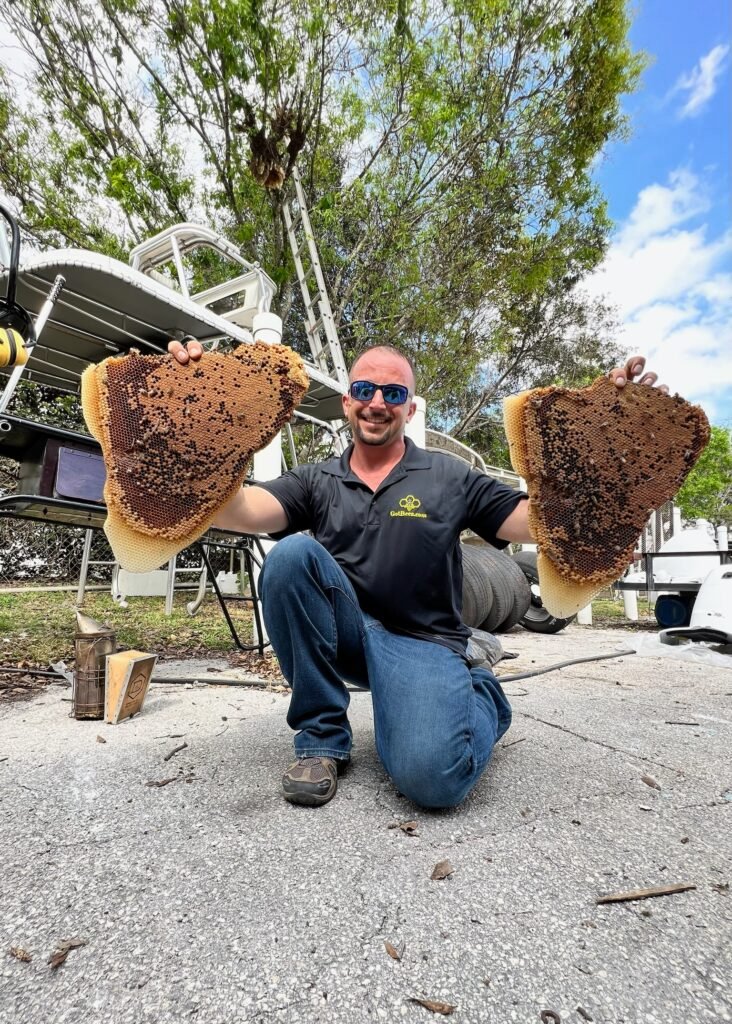
Award-Winning Bee Removal Trusted Across South Florida





Recent Tree Bee Removal Videos
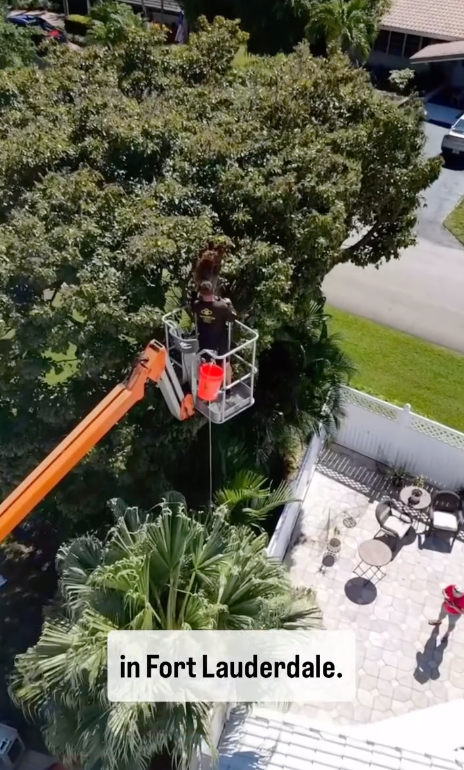
These prior South Florida tree jobs show the type of high-reach and difficult-access bee removals our team handles every week.
High-Reach Tree Bee Removal
A recent difficult-access colony rescue using specialized equipment to safely remove bees high above the ground.
Lift-Assisted Tree Hive Removal
A real-world example of the kind of tree canopy job that requires careful planning, safety control, and precise live extraction.
Large Tree Colony Rescue
Another South Florida tree removal where a live colony had to be handled safely without harming the surrounding property.
Common Tree Bee Removal Locations
South Florida trees create countless nesting opportunities for honey bees. Some are obvious, like a hanging swarm on a branch. Others stay hidden for months inside hollow trunks, old pruning wounds, decayed cavities, palm crowns, or dense canopy cover.
Tree Cavities
Bees often build established colonies inside hollow areas of oaks, mango trees, ficus, and other mature landscape trees.
Tree Branches
Fresh swarms can cluster on exposed limbs or low-hanging branches, creating a visible hazard in active yard space.
Palm Trees
Bees often settle in palm crowns, boot layers, old pruning scars, and protected spaces high above ground level.
Fruit Trees & Ornamental Trees
Mango, avocado, lychee, and ornamental landscape trees can all host swarms or established colonies near patios, pools, and garden areas.
Swarm on a Branch vs. Established Colony in a Trunk
This is one of the most important distinctions in tree bee removal. A swarm hanging on a branch is usually a temporary cluster. A colony inside a trunk cavity is a built-out hive with comb, brood, honey, and a long-term nesting site.
| Tree Bee Situation | What It Usually Means | Removal Complexity | Main Risk if Ignored |
|---|---|---|---|
| Swarm hanging on a branch | Temporary resting cluster looking for a permanent home | Often simpler and faster to remove live | May move into your wall, roofline, shed, or tree cavity within hours or days |
| Established colony inside a tree trunk | Permanent hive with comb, brood, honey, and repeated activity | More technical; may require trap-out, lift access, or controlled cavity work | Long-term aggressive bee activity, expanding colony size, and repeated swarming |
South Florida Palm Tree Bee Removal
Palm trees are one of the most overlooked bee problem areas in South Florida. Unlike broad-canopy shade trees, palms create vertical, tightly layered nesting opportunities that can hide bees high above eye level.
Royal Palms
Tall royal palms can hide bee activity near the crown shaft and old cut areas, often requiring lift access for safe removal.
Sabal Palms
Florida sabal palms often have dense boot structure and hidden nesting zones where bees can establish protected colonies.
Coconut Palms
Coconut palms near pools, patios, and walkways can create especially risky bee zones because the nesting area is often directly above active outdoor living space.
Queen Palms
Queen palms are common in South Florida residential landscaping and can host colonies in old frond bases, pruning scars, and crown cavities.
Trap-Out Technique for Tree Cavities
When bees are living deep inside a tree cavity, cutting into the tree is often not the best option. In many cases, a trap-out can be used instead. This technique lets bees exit the cavity through a one-way system but prevents them from returning, gradually drawing them into a nearby hive box.
Trap-outs are especially useful when the goal is to preserve the tree, avoid cutting, and still remove the colony humanely. It is not always the fastest method, but in many tree cavity situations it is the cleanest and most practical long-term solution.
Africanized Bee Tree Colonies — Extra Caution
Tree colonies deserve extra caution in South Florida because any feral honey bee colony may be Africanized. When that colony is elevated, hidden, or disturbed by landscaping activity, the risk increases significantly.
High-Risk Tree Colony Warning
Do not shake branches, cut limbs, trim palms, spray cavities, throw rocks, or run lawn equipment near an active tree colony. If the bees are aggressive, tree removals may need to be approached as a potential Africanized bee removal situation.
If bees are chasing people, reacting to vibration, or guarding a hidden trunk cavity or palm crown, we recommend treating the situation as potentially Africanized until professionally evaluated. For homeowners who want more detail on aggressive bee behavior and why that matters in South Florida, see our page on Africanized bee removal in Broward and Palm Beach County.
Our Tree Bee Removal Process
Our tree bee removal process is built to minimize damage to the tree while still prioritizing safety and full colony resolution.
1. Identify the Type of Tree Job
We determine whether it is a temporary swarm, a palm crown issue, or an established colony inside a trunk cavity.
2. Assess Access and Safety
We evaluate height, canopy density, nearby structures, public access, and whether lift equipment or specialized setup is needed.
3. Choose the Right Removal Method
Depending on the tree and hive type, we may perform direct live removal, swarm capture, cavity extraction, or a trap-out.
4. Protect the Surrounding Area
We secure the work zone so people, pets, landscapers, and neighbors are kept safely away during the removal.
5. Live Relocate the Bees
The colony is relocated humanely rather than destroyed.
6. Reduce Future Attraction
We advise on cavity conditions, repeat swarm risk, and when follow-up cleanup or structural work may still be needed.
Tree Bee Removal Case Examples
We regularly handle tree bee jobs across South Florida, including high palms, mature oaks, hollow trunks, and difficult-access residential landscape trees.
- Palm Tree Bee Removal: A homeowner in West Palm Beach had a large beehive high in a backyard palm tree. Our team removed the colony safely while protecting the tree and the surrounding pool and yard area.
- Oak Tree Cavity Bee Removal: In Coral Springs, bees had taken residence inside a mature oak trunk cavity. We evaluated the tree and removed the colony while preserving the health of the tree.
- High-Reach Island Tree Colony: We have also handled tree colonies 30+ feet in the air where specialized lift access was required to complete the removal safely.
When Tree Bee Removal Also Needs Honeycomb Cleanup
If the colony has moved from a tree into a nearby wall, roofline, soffit, or structural void, removing the visible bees is only part of the solution. Any leftover comb in a building cavity can melt, smell, attract pests, and bring bees back.
For homeowners dealing with that kind of crossover issue, read our page on honeycomb removal and cavity cleanup, or boom lift bee removal for high canopy access so you understand why full cleanup matters just as much as the initial bee removal.

Need Live Bee Removal From a Tree?
If you have bees in a palm tree, hanging on a branch, entering a trunk cavity, or flying aggressively around a landscape tree, call GotBeez now for safe live bee removal across Broward and Palm Beach County.
Frequently Asked Questions About Tree Bee Removal
These FAQs help South Florida homeowners understand the difference between a branch swarm and a tree colony, why palms are different, and how live bee removal from trees is handled.
A swarm on a branch is usually a temporary cluster looking for a permanent home. A colony inside a tree cavity is an established hive with comb, brood, honey, and repeated bee traffic.
Yes. GotBeez removes bees from royal palms, sabal palms, coconut palms, queen palms, and other South Florida palms where bees commonly hide in crowns, boot layers, and old cut areas.
Usually no. Many tree cavity jobs can be handled with live removal or a trap-out technique, which often avoids cutting the tree down entirely.
A trap-out uses a one-way exit system over the tree cavity opening so bees can leave but not return. A hive box is placed nearby to gradually pull the colony out without cutting into the tree in many cases.
They can be, especially when hidden high in a canopy or palm crown. Landscaping work, tree trimming, vibration, or accidental disturbance can trigger aggressive defensive behavior with little warning.
Yes. Any feral honey bee colony in South Florida should be treated as potentially Africanized until professionally evaluated, especially if the bees are highly defensive or react strongly to vibration.
As soon as possible. A swarm hanging outside may still move into your home, shed, soffit, or another cavity nearby. An established colony in a tree will continue growing and may swarm again.
Yes. GotBeez provides tree live bee removal throughout Broward and Palm Beach County for homes, estates, HOAs, parkside properties, and commercial landscapes.